Build for me · Makerhood Sadulpur
Put technology to work.
For local businesses, schools, clinics and people with an idea who need a website, simple software, automation or a first prototype. Tell us what is slow, difficult or not built yet.
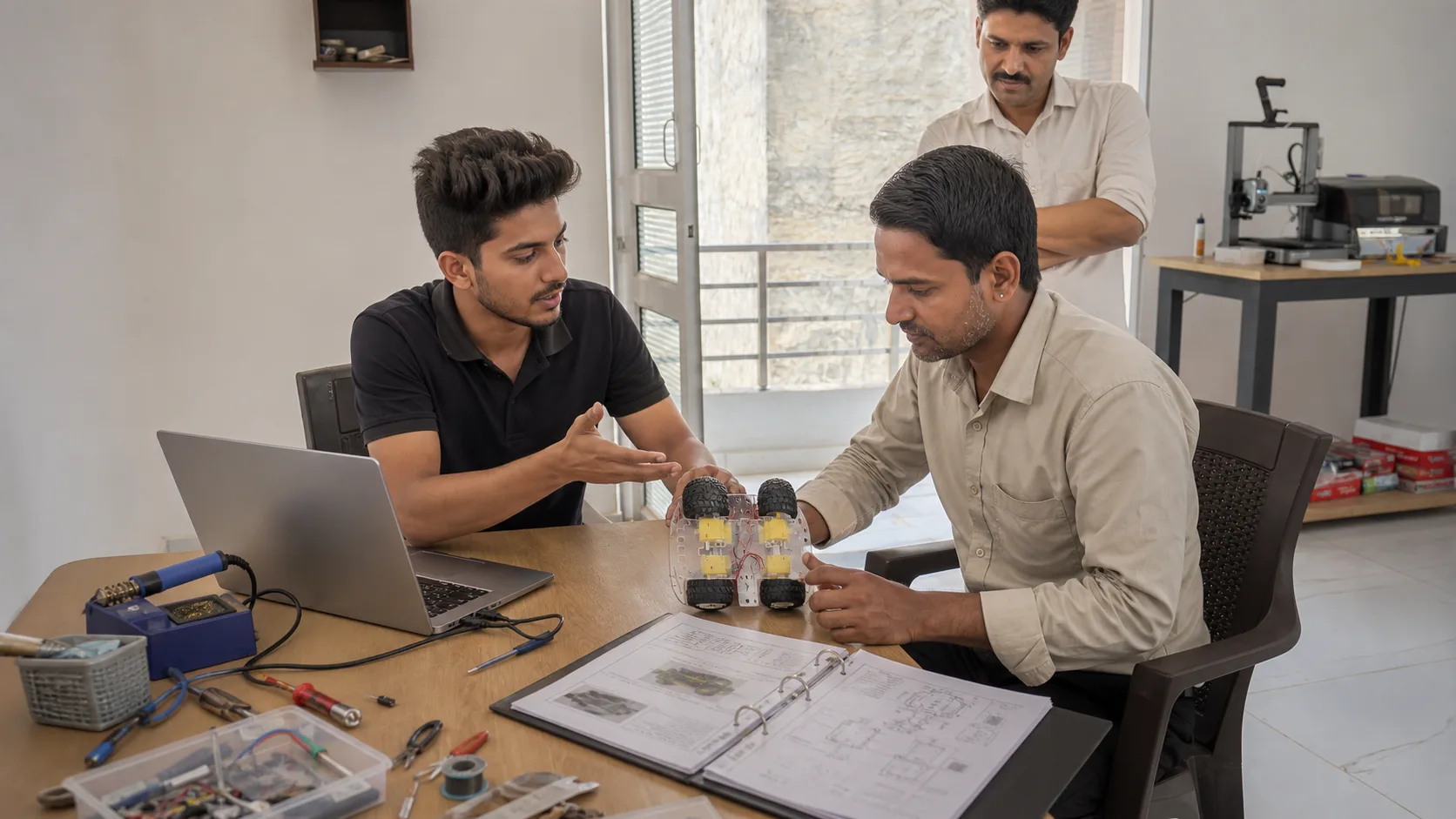
What we can help build now
Start with a version you can test.
The answer may be software, hardware or both. We build only enough to find out whether the idea helps.
- 01
Websites & enquiry journeys
Create a clear, credible website that helps the right local customers understand the offer and take the next step.
- 02
Simple business tools
Replace repeated calls, registers or scattered messages with a focused booking, tracking or workflow tool.
- 03
Useful automation
Connect routine steps and information so everyday work takes less manual follow-up.
- 04
Devices & prototypes
Test an idea through sensors, electronics, code, mechanisms and custom 3D-printed parts.
Before you enquire
Enough clarity to judge the fit.
Custom work varies, but the way Makerhood starts and the decisions you should expect do not need to be vague.
Best for
Focused first versions
Websites, small tools, useful automation and physical prototypes with a clear test.
First input
A problem, photo or sketch
You do not need a technical specification or a finished product brief.
First commitment
Fit check, then written scope
The next step and its price are agreed before open-ended build work begins.
Final decision
Improve, hand over or stop
The first version should create evidence—not pressure to keep spending.
Good fit
Bring us the work that is slow, unclear or still imaginary.
You do not need a polished brief. A rough explanation, photo or sketch is enough to begin.
Makerhood is a small founder-led studio. We are a good fit for focused local websites, small internal tools, first versions and custom prototypes—not giant enterprise systems or mass manufacturing.
How it moves
Test before adding more.
First check whether the solution improves the work. Add features and polish only after that.
- 01
Bring the problem or rough idea
A sketch, photo, broken part or simple explanation is enough. We start with the situation, not a shopping list of technology.
- 02
Test the difficult assumption
We identify what could make the idea fail and put that on the bench first.
- 03
Build one working version
The website, tool, automation or physical prototype is made usable enough to test with real people and real work.
- 04
Decide what comes next
The prototype gives us evidence: improve it, make another, hand it over—or stop before wasting money.
Before work begins
One written brief removes expensive ambiguity.
Every accepted project should make four commercial decisions explicit before build work starts.
- 01
Scope and success test
What the first version includes, what it excludes and how both sides will decide whether it works.
- 02
Price and payment points
A written project fee or paid discovery step—never an open-ended commitment created by the website.
- 03
Timeline and client inputs
Review dates, information or access you must provide, and the decisions that could move delivery.
- 04
Handover and support
Files, documentation, ownership, training, warranty or support period agreed for that specific build.
Makerhood does not publish a made-up starting price because websites, internal tools and physical prototypes have different cost drivers. After the first fit conversation, you should receive either a clear next-step price or an honest no-fit answer.
Business questions
Protect the project before it gets complicated.
Can Makerhood quote a project from one WhatsApp message?
Sometimes a simple next step can be priced quickly, but most custom work needs a short fit conversation. If the risky part is still unclear, Makerhood may recommend a paid discovery or prototype step before a full quote.
Who owns the files, code or design?
Ownership, access, reuse and any third-party licences should be written into the project brief. The website does not impose one hidden default across very different kinds of work.
Can you manufacture large quantities?
Makerhood is currently suited to prototypes, custom parts and small first versions—not mass manufacturing. A successful prototype can still be documented for a suitable production partner.
What happens after handover?
The brief should state what is handed over, what training is included and whether there is a warranty or support period. Ongoing support is not assumed unless it is explicitly agreed.
Built, opened, improved
The bench leaves a record.
Measurements, test versions and visible decisions show how an idea was made more useful—not just more polished.
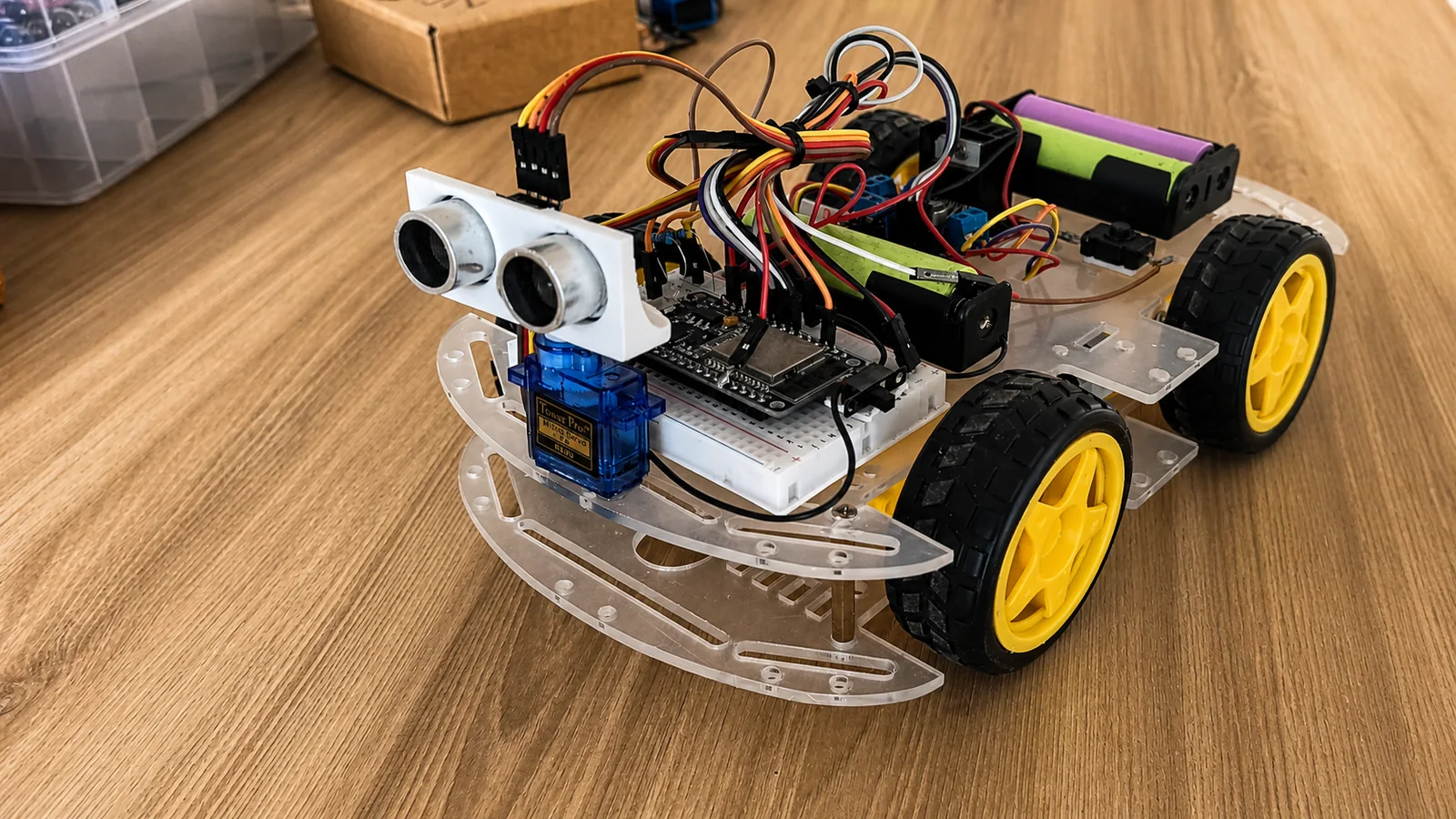
Robotics Four-wheel sensor rover
A four-wheel rover with an ESP32, motor drivers, battery power, a servo and an ultrasonic sensor mounted on a printed bracket.
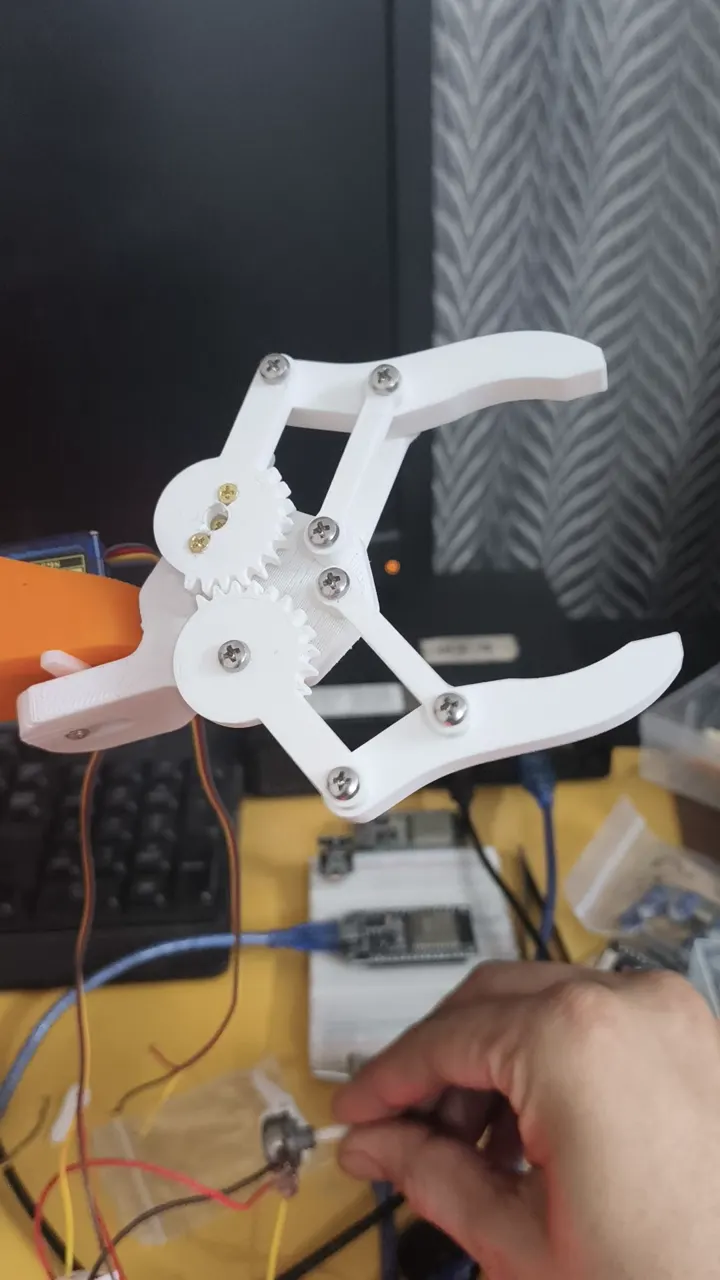
Mechanisms Printed servo gripper
A compact geared claw assembled from printed parts, fasteners and a servo, then tested on the electronics bench.